Innovative application of CNC machining center in medical device manufacturing

Hi-Precision Machinery Co.,Ltd is a company focused on high-precision parts manufacturing, especially in the field of high-precision five-axis parts processing and precision lathe processing has deep technical accumulation and rich industry experience. The company is committed to providing customers with ultra-high precision, high quality customized parts processing services, widely used in aerospace, medical equipment, automotive manufacturing and other advanced industries. With advanced five-axis machining equipment, strict quality control system and professional technical team, Our precision machining has become a trusted partner in the industry to provide customers with efficient and reliable precision parts solutions
With the continuous progress of medical technology, the precision, diversity and personalized demand for medical equipment is increasing, CNC machining center with its high precision, good repeatability, strong flexibility characteristics, in the field of medical device manufacturing is playing an increasingly important role. Here are a few key innovative applications of CNC machining centers in medical device manufacturing:
1. High precision medical parts production
Implant manufacturing: such as cardiac pacemakers, artificial joints, dental implants, etc., these devices implanted in the human body require extremely high accuracy and biocompatibility. The CNC machining center can process complex geometric shapes according to detailed numerical control programming, and achieve extremely high tolerance control to ensure the consistency of parts and specification accuracy.

2. Surgical tools production
Including scalpels, scissors, complex robotic arms, etc., these tools need to be manufactured with high precision to ensure the smooth operation of the surgical process and the safety of the patient. CNC machining centers are capable of producing complex geometric shapes and tight tolerances to meet the high precision requirements of surgical tools.

3. Personalized medical equipment customization
Prosthetics and assistive devices: Using 3D scanning and CAD modeling technology, CNC machining centers can customize prosthetics and assistive devices according to the physical characteristics of the patient, ensuring the perfect fit and functionality of the device. This personalization improves patient comfort and treatment outcomes.

4. Orthopedic implants:
Depending on the patient's bone structure and needs, CNC machining centers can manufacture personalized orthopedic implants, such as hip replacements and knee implants, for precise medical repair.
5. Rapid prototyping
Medical device prototyping: Rapid prototyping is a crucial part of the medical device development process. CNC machining centers are able to quickly convert digital designs into physical prototypes, enabling engineers to test and improve designs in a short period of time, speeding up product development cycles.
Small batch production
For medical equipment requiring small batch production, CNC machining centers can flexibly adjust the production plan, reduce production costs, and improve production efficiency.

Material compatibility and diversity
Processing of biocompatible materials: CNC machining centers are capable of processing a variety of biocompatible materials, including plastics, metals, ceramics, etc., to ensure that the properties and biocompatibility of the materials are not affected during processing. This is particularly important for the manufacture of medical implants and surgical tools.
Material optimization:
With CNC machining, manufacturers can optimize material use and reduce waste and costs. This is particularly important for the production of implants using high-value materials such as titanium and platinum.
Automation and quality control
Automated production: The integration of CNC machining centers with advanced technologies such as automation and artificial intelligence (AI) enables the automation and intelligence of the production process. This reduces the variables and errors introduced by human operation and improves production efficiency and product quality.
On-line inspection systems:
Many CNC machines are equipped with on-line inspection systems that can monitor machining quality in real time to ensure that the final product meets strict medical standards.

With the development of medical level, medical products are being updated and iterated rapidly, playing a key role in overcoming one problem after another in medicine. Medical products include medical devices, medical equipment, etc. These products all need precise size, real material and special surface treatment. We provide CNC customized machining services for medical products for a long time. We have rich experience in its processing and assembly, and we are helping more customers who need medical products to solve the delivery, quality, assembly and other problems of products and small batch production.

How does Precision cnc Machining impact the healthcare industry?
As we all know, the medical industry is related to human life safety. Therefore, the medical industry has many requirements for the medical environment, surgical instruments, and operators. Among them, all kinds of medical devices, tools and equipment with accurate dimensions are highly dependent on the cnc machining industry with strict tolerance requirements to support. CNC machines can produce medical-grade parts with the highest precision.
Medical device accessories require very small precision & parts and tips with tight tolerances and complex details to achieve a variety of extremely fine practical operations in medical surgery.
For example, in the operation of vital organs such as blood vessels, the brain, and the heart, even the smallest deviation can have disastrous consequences. With high-precision CNC machining, precise, precise tools can be manufactured, while also achieving workpiece safety and reliability.
As a computer-aided manufacturing process, cnc machining utilizes computer software to direct the movement of machinery and other tools. This allows for better control of tool functionality and reduces the risk of human error due to less operator involvement.
CNC machining is also compatible with a wide range of materials, enabling it to meet a wide range of material requirements for different medical applications. Other benefits of cnc machining compared to other manufacturing methods include cost effectiveness and shorter turnaround times.
CNC machined parts are ideal for a wide range of medical industry applications. Medical parts can range from small parts such as buttons and switches to larger parts such as display housings. From surgical instruments and artificial joints to parts for medical pumps, CT and MRI scanners. CNC machining offers an excellent way to produce precision medical components.

For the consideration of factors such as human safety, non-toxic and easy disinfection, medical institutions usually choose safe and durable materials that are not easy to rust and wear, such as joint replacement parts are usually made of medical stainless steel and medical titanium, in order to obtain high strength & support and elasticity.

Precision CNC machining companies make these special materials into complex shapes and sizes to meet the requirements according to customer drawings and actual needs. Even some parts will be implanted in the human body, so these parts must meet extremely strict accuracy requirements and require the workpiece surface is quite smooth without burrs and streaks.
CNC machining has a detailed manufacturing process, a variety of processing technology and treatment means, even extremely hard materials can become a smooth instrument to meet the needs. It is even possible to design each tightly stitched part according to the drawings and assemble it into the target large instrument in the correct way to achieve the best performance of the instrument.
Medical devices need to be miniaturized in order to meet their safety and comfort, because only components that are small and precise enough can be implanted in the human body to enable patients who need medical devices such as insulin pumps, heart monitors, and defibrillators to live a relatively normal life.
CNC precision machining also enables custom design of certain medical device parts to achieve accurate and personalized fit. This is especially important for artificial devices that need to be precisely adapted to people's needs, such as artificial knees, prosthetics, etc.

Precision CNC machining is unique in that it can meet this demand. Custom parts are simple and cost effective with CNC precision machining. By entering design requirements into computer control, parts can be machined quickly and accurately. This is also a brief process of cnc machining. Cnc machining has promoted the development of the medical industry, and in the long run, it is an indispensable part.
Medical instruments and tools are famous for their complex structure, high accuracy and reliability requirements. Medical device parts have higher requirements for workpiece materials, processing accuracy, and surface finish, which also means that precision machining capabilities need to go to a higher level. Precision machining technology is an advanced manufacturing technology developed to adapt to modern high and new technology. In recent years, with the deepening of global intelligent manufacturing, the contribution of precision machining technology to the medical device industry will be increasing.
The following parts are the parts of the thromboelastometer produced by our company for customers:
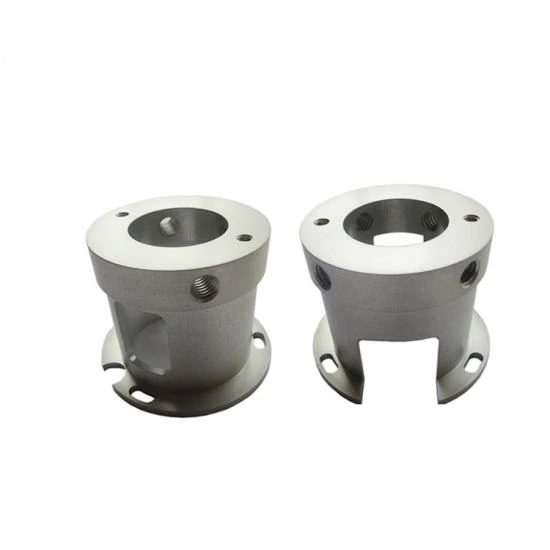
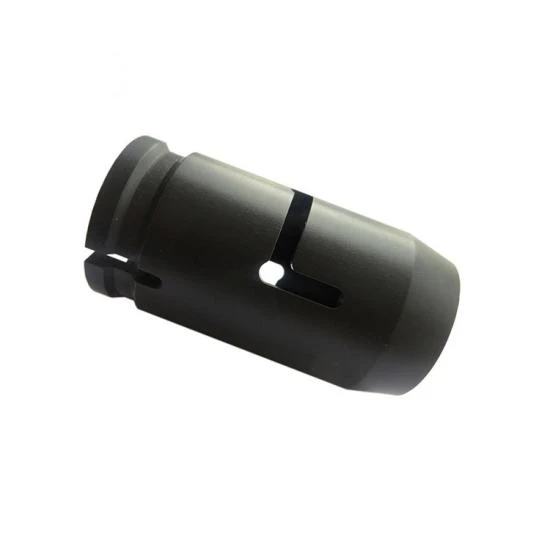
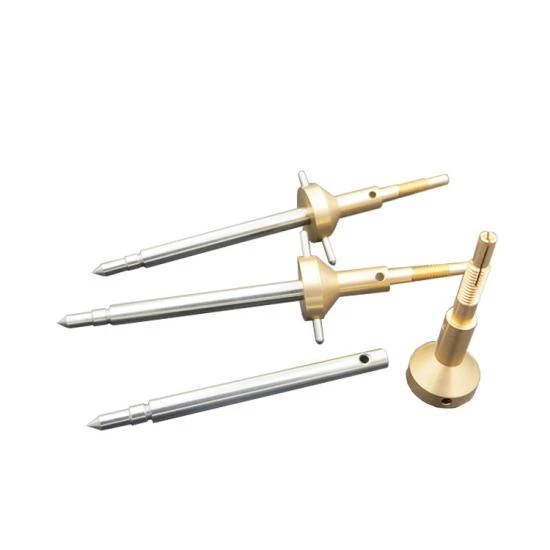

The following parts are the parts of the laser hair removal device produced by our company for customers: